The honest answer from our local team: for a lot of people, yes — and often for reasons they didn't expect. Springfield sits right next to Eugene, sharing its hospitals, major employers, and University of Oregon events, but homes here typically cost less than they do across Interstate 5. You get the amenities of a mid-size city, the McKenzie River at the edge of town, and a downtown that's become genuinely walkable — without Eugene-side pricing.
The short version of what makes Springfield work:
We've been a local Eugene-Springfield brokerage since 2003, and we read this market in person — not from a national database. If you're weighing a move, the rest of this guide walks through the neighborhoods, schools, and day-to-day life here, and you can browse current homes for sale in Springfield any time.
More affordable than Eugene — similar access, lower home prices and rents, and shorter-than-average commutes.
Real job stability — anchored by PeaceHealth's Sacred Heart Medical Center at RiverBend, the Springfield School District, and local manufacturing, not a single industry.
Outdoor access built in — the McKenzie and Willamette Rivers, the Willamalane park system, and trails sit minutes from most neighborhoods.
A walkable, hip downtown — the historic Washburne District has become one of the city's most sought-after places to live, with breweries, restaurants, and shops at the doorstep.
Room for every buyer — from entry-level homes in Thurston to rural acreage in Mohawk.
Living in Springfield, Oregon: What to Expect by Neighborhood
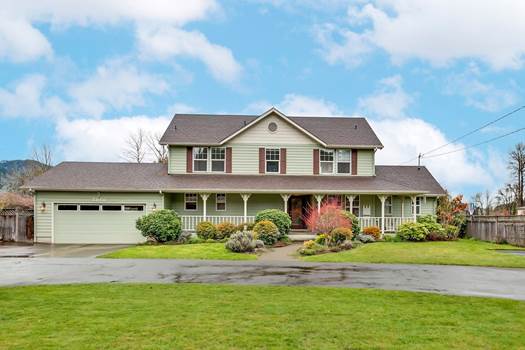
Springfield covers more ground than most newcomers expect. The city runs roughly from the Willamette River on the west to the Thurston foothills on the east, with the McKenzie River forming a natural northern boundary near Hayden Bridge. North Springfield — the area between the McKenzie and the older industrial corridor — has its own character: quieter streets, established lots, and quick access to both downtown and the river. South and east, the neighborhoods shift toward newer subdivisions and family-oriented streets with more square footage per dollar.
What ties it together is proximity. Whether you land in a Washburne bungalow, a Thurston ranch, or a rural parcel out toward Mohawk, you're within a short drive of PeaceHealth Sacred Heart Medical Center at RiverBend, the full range of Eugene-area employers, and the trailheads that make this corner of the Willamette Valley worth staying in. Springfield is two zip codes — 97477 west and downtown, 97478 east toward Thurston. If you're ready to look at what's available, you can browse Springfield homes for sale alongside this guide.
Springfield isn't one-size-fits-all. Here are the six areas we point buyers to most, depending on whether you want walkable downtown living, a family street, or room to breathe.
1. Washburne District
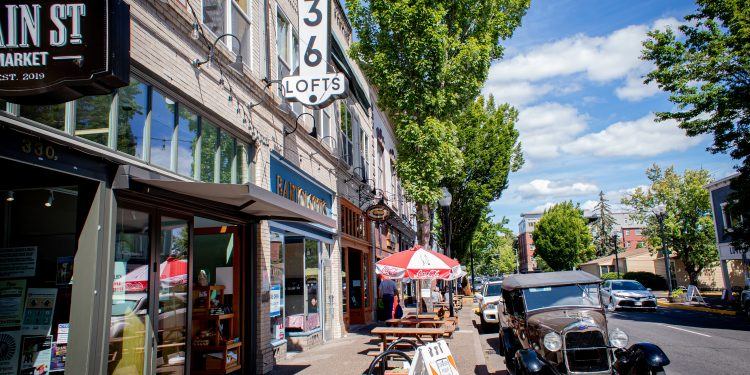
Washburne is the first place we send buyers who want to walk to everything. The historic district — on the National Register of Historic Places since 1987 — packs roughly 34 tree-lined blocks of Craftsman bungalows, cottages, and homestead-era farmhouses built between the 1890s and 1940s, wrapped right around downtown Springfield's Main Street. You can walk to breweries, tasting rooms, restaurants, the library, and Island Park on the Willamette, with the University of Oregon and PeaceHealth just minutes away. It's the most characterful place to live in the city, and well-kept homes here tend to move fast. See current Washburne District homes.
2. Thurston
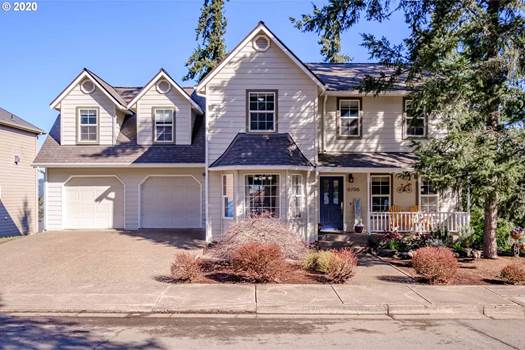
On Springfield's east end, Thurston is the go-to for buyers who want newer, more affordable family homes with quick access to hiking, the McKenzie River, and the route to Central Oregon. Multiple parks and schools are close by, which is why it's a favorite for first-time buyers and growing families.
3. Hayden Bridge
A quiet, established neighborhood on Springfield's north side, Hayden Bridge sits close to both downtown and the McKenzie River. Approachable pricing makes it a common landing spot for first-time homebuyers who still want to be near the water and the city center.
4. Gateway
If you want affordable homes plus everyday convenience, Gateway is hard to beat. On the west side of Springfield near shopping centers, restaurants, and parks, with direct Interstate 5 access, it gets you anywhere in Eugene and Springfield quickly while keeping pricing reasonable.
Looking for a more rural setting? Mohawk, on Springfield's eastern edge, offers scenic views and larger parcels that suit gardening and micro-farming. It's the quiet, open-space option for buyers who want acreage without leaving the area.
On the city's southern edge, South Springfield pairs easy Interstate 5 access with a suburban feel that sits a step removed from the busier corridors. It's a practical pick for commuters who still want quiet streets at the end of the day.
Life in Springfield: Downtown, Dining, and the Outdoors
What sells most buyers on Springfield isn't a spreadsheet — it's a Saturday spent here. Downtown's Main Street and the historic Washburne District have become the city's social center, where locally owned restaurants, coffee shops, tasting rooms, and breweries sit alongside longtime businesses. On the second Friday of every month, the downtown galleries and shops open their doors for the Second Friday Art Walk, anchored by the Emerald Art Center, and the outdoor Art Alley murals give the core a creative streak you won't find in a generic suburb. When you want the current short list of where locals actually eat and drink, we keep a running guide to Springfield's best restaurants, coffee shops, and breweries.
Step outside downtown and the setting takes over. Island Park sits right on the Willamette and hosts summer concerts and the city's Fourth of July celebration, the Springfield History Museum keeps the town's logging-era story close, and the Willamalane park system threads trails, pools, and green space through nearly every neighborhood. Add the McKenzie and Willamette Rivers for fishing and paddling, and weekends here rarely run short on options — we've rounded up our favorites in our guide to things to do in Springfield, Oregon.
This is the part a national listings site can't tell you. Knowing which block is walkable to a brewery, which park hosts the summer concerts, and how a street actually feels on a weeknight is the difference between buying a house and choosing where you want to live — and after helping buyers and sellers here since 2003, it's the part our team knows firsthand.
Schools in Springfield, Oregon
Springfield students are served by Springfield Public Schools (District 19), which runs neighborhood schools from elementary through high school across the city. For families relocating here, the practical step is matching a school's attendance area to the neighborhood you're weighing — something we're glad to help you line up.
On the elementary side, Thurston, Centennial, and Maple are long-standing neighborhood schools, with Walterville and Ridgeview giving families more options toward the city's edges. Ratings and boundaries shift year to year, so check current scores on GreatSchools before you commit — and for a fuller rundown, see our guide to Springfield, Oregon schools.
A Brief History of Springfield, Oregon
Springfield was settled in 1848 by Elias and Mary Briggs and named for a spring near their homestead. Farming, logging, and the area's flour and saw mills drove the early economy, and the railroad's arrival in 1891 opened the town up to faster growth. Timber carried Springfield through much of the 20th century before the economy broadened into the healthcare, manufacturing, and retail mix that anchors it today.
Springfield also has a pop-culture claim to fame: it's often cited as an inspiration for the town in The Simpsons. Creator Matt Groening grew up in nearby Portland, and in 2014 a large Simpsons mural was installed in historic downtown — dedicated with Yeardley Smith, the voice of Lisa Simpson, on hand.
Thinking About a Move to Springfield?
Springfield rewards people who know it well — the right neighborhood for your budget, the school boundary that fits your family, the street that's quietly walkable to everything. That's the kind of local read a national listings site can't give you, and it's what our team at Heart & Home Real Estate has offered Springfield buyers and sellers since 2003. We're a small, local brokerage, which means you work with people who actually know these streets — not a call center.
Whether you're months from a move or just starting to look, we're happy to answer questions about neighborhoods, schools, or what your home might be worth in today's market. Send us a note below and one of our agents will follow up.
For many buyers, yes. Springfield offers lower home prices than neighboring Eugene while sharing the same hospitals, employers, and University of Oregon access. Add a walkable historic downtown, strong outdoor recreation along the McKenzie and Willamette Rivers, and a job base anchored by healthcare, education, and manufacturing, and it's an easy place to settle into.
How far is Springfield from Eugene, Oregon?
Springfield sits directly next to Eugene, separated mainly by Interstate 5. The two downtowns are roughly five miles apart — about a 10- to 15-minute drive — so residents share access to Eugene's hospitals, employers, airport, and University of Oregon events while often paying less for a home.
What is Springfield, Oregon known for?
Springfield is known for its historic Washburne District and revitalized Main Street, easy access to the McKenzie River and outdoor recreation, and a long logging and timber heritage. It's also widely linked to The Simpsons, with a downtown mural celebrating creator Matt Groening's Oregon roots.
What county is Springfield, Oregon in?
Springfield is in Lane County, Oregon — the same county as Eugene, Cottage Grove, and the communities along the southern Willamette Valley. Lane County is Oregon's fourth-largest county by population and stretches from the valley floor east into the Cascade Range, taking in the McKenzie River corridor and the Three Sisters Wilderness.
For practical purposes, being in Lane County means Springfield residents share county-level services with Eugene: the Lane County Sheriff, Lane County courts, Lane County public health, and the Lane County Assessor's office all cover Springfield addresses. Property tax bills, deed recordings, and permit applications run through the same county offices whether your address is in Eugene or Springfield.
If you're relocating and comparing jurisdictions, the key distinction is that Springfield has its own city government, school district, and utility system (Springfield Utility Board) — so while the county is shared, day-to-day city services are independent of Eugene. That separation is part of why Springfield has been able to set its own development pace and maintain lower home prices than its neighbor across Interstate 5.