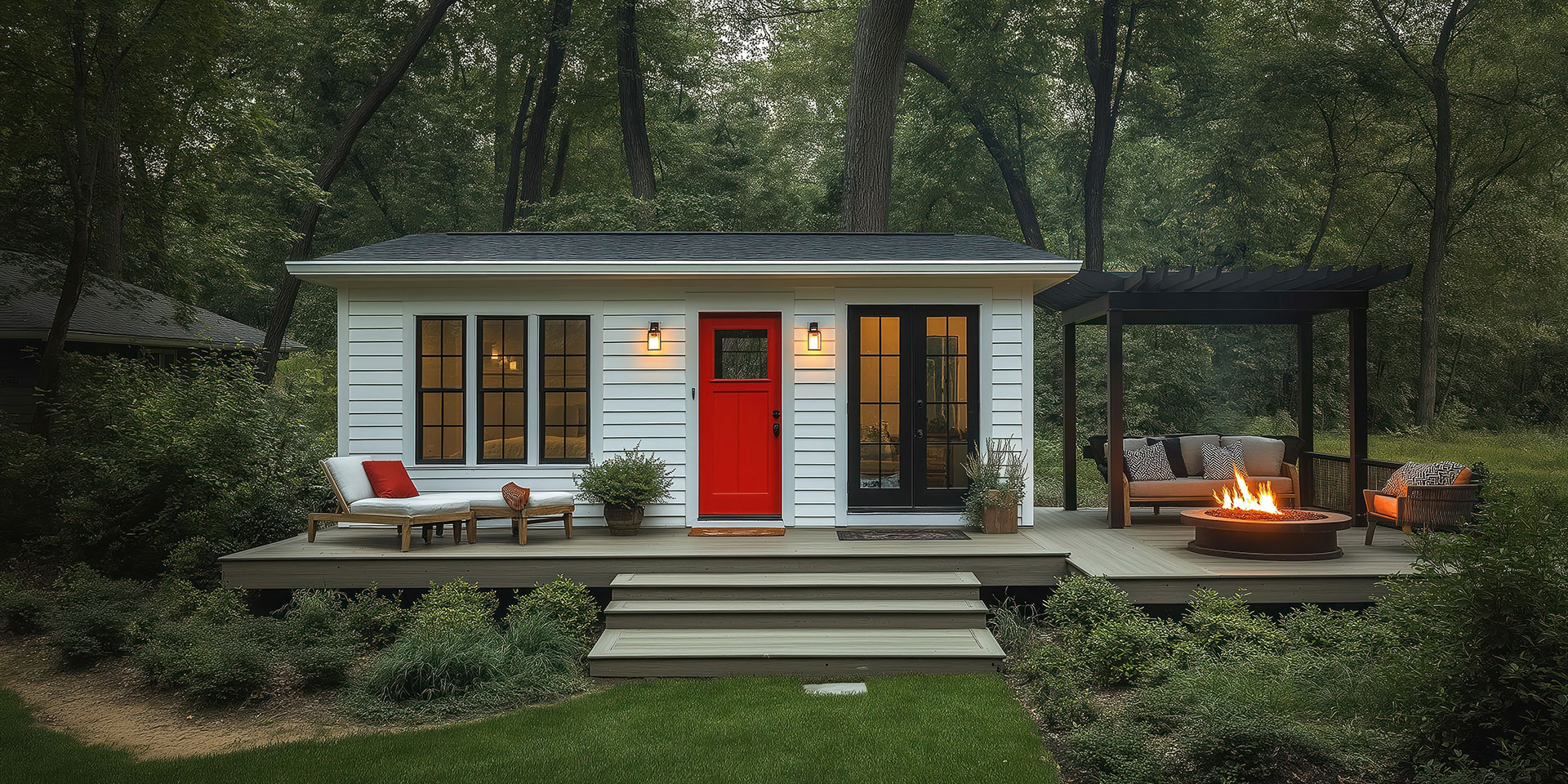
An ADU — short for accessory dwelling unit — is a second, smaller home on the same lot as a house, with its own kitchen, bathroom and place to sleep. Plumbing design and installation are part of every ADU project, whether you are building new or converting an existing structure. In real estate you will also hear them called backyard cottages, granny flats, mother-in-law units or garage apartments. An ADU can stand on its own in the yard, sit above a garage, or be attached to or built inside the main house.
In Eugene, every detached house in a residential zone is allowed one. You can build it new, convert a shed or garage that is already there, attach it to the house, or put it above a detached garage. This guide walks through each option, Eugene's size and height rules, what Oregon law guarantees, the different rules in rural Lane County, what the City charges, renting an ADU out, and what one does to a home's value.
Four Ways to Add an ADU in Eugene
- Build a new backyard cottage — a detached ADU on its own foundation.
- Convert a shed, garage or studio that is already on the lot.
- Attach it to the house — an addition, a converted attached garage, or a basement or interior conversion.
- Build it above a detached garage.
Option 1: Build a New Backyard Cottage
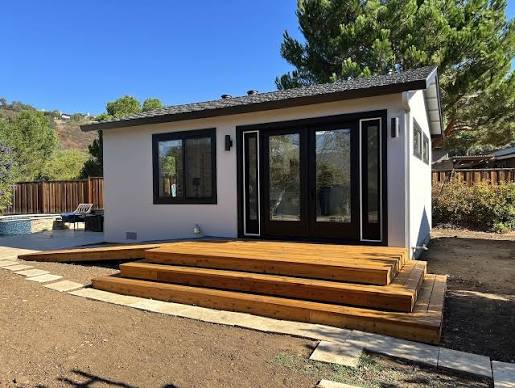
A new detached cottage gives you the most freedom in layout, and it is the option the City has done the most to make easier. Its Pre-Approved ADU Program offers 13 designs that have already been through building permit review, from 293 to 795 square feet, so you skip the cost of plan review. One of them, the Joel — a 576 square foot studio drawn by the City — is free to download. The rest are bought from the firms that designed them.
A pre-approved plan still has to fit your lot. Steep slopes, certain soils or a two-story design can call for extra engineering, and the size and setback rules below still apply.
Option 2: Convert a Shed, Garage or Studio You Already Have
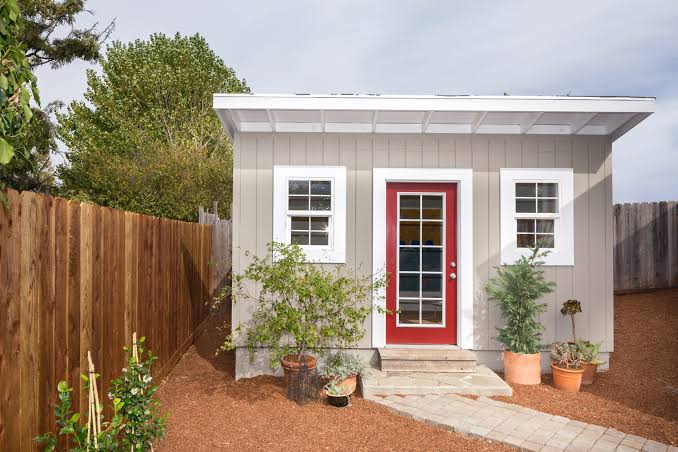
If there is already a solid building in the backyard — a detached garage, a shop, a studio or a large shed — turning it into an ADU can reuse a roof, walls and a foundation you have already paid for. Converting a detached garage is on the City's own list of ADU types.
Two things decide whether it works. First, the building has to meet the building code as a place to live once it is converted, including fire separation: 6 feet of open space between detached buildings, or fire-rated walls. Plan on a building permit either way — a shed that never needed one will need one to become a home. Second, it has to meet Eugene's ADU size and setback rules. If an existing building misses one of those land use standards, the City lets you ask for an adjustment to convert it anyway. That door is closed in the Amazon, Fairmount and South University neighborhoods, where the standards cannot be adjusted.
A converted outbuilding can also keep some of its old job. Up to 300 square feet of unheated storage or garage space attached to a detached ADU does not count toward its size.
Option 3: Attach It to the House
An attached ADU shares at least 8 feet of wall or ceiling with the house. The City lists four ways to get there: an addition built onto the house, a converted attached garage, a converted basement, or part of the house walled off as its own home.
Because the two homes share a structure, the building code asks more of the wall between them: fire-rated walls or floors, sound insulation rated STC 45, and separate access to heating and electrical equipment for each home. A furnace or electrical panel in one unit cannot serve the other.
Near the street — within 60 feet of the front lot line — an attached ADU can be as tall as the house is allowed to be. Farther back, it follows the same sloped setback as a detached ADU.
Option 4: Build It Above a Detached Garage
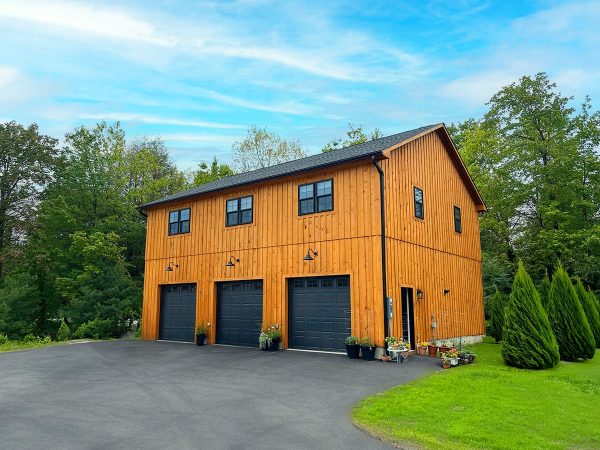
A garage apartment puts the ADU on the second floor and keeps the parking, workshop or storage underneath. Eugene lets the building reach 25 feet, and up to 800 square feet of unheated garage or storage below the ADU does not count toward its size.
The limit is your neighbors' light. Where the lot next door is zoned for low-density housing (R-1 and a few similar zones), the walls must stay at least 5 feet from the property line, and above 22 feet the roof has to step back from that line at 10 inches up for every 12 inches in. Set the building at least 20 feet from that line and the step-back no longer applies. Dormers can push into the sloped area as long as they take up no more than half the roof's width and sit at least 2 feet back from the walls.
Eugene ADU Rules at a Glance
These are the City of Eugene's standards inside city limits, from the city's land use rules as they read today. Your lot's zone, slope and shape can change the answer, so confirm with the City's land use staff at 541-682-8336 before you pay for plans.
| Question | Eugene's Answer |
|---|---|
| How many ADUs per house? | One, for each detached house in a residential zone |
| Maximum size | 800 sq ft or 10% of the lot, whichever is smaller |
| Amazon, Fairmount and South University | 600 sq ft on lots under 9,000 sq ft; 800 sq ft on larger lots; bedroom limits |
| Maximum height | 25 ft, with a sloped setback near side and rear lot lines |
| Side and rear setback | 5 ft minimum |
| Unheated storage not counted | Up to 300 sq ft; up to 800 sq ft under an ADU above a garage |
| Detached ADU entrance | A covered entry at least 3 ft by 3 ft, and a hard 3 ft walkway from the street or alley |
| Extra parking space | Not required (Oregon law) |
| Owner must live on site | No (Oregon law) |
Sources: the City of Eugene's land use rules, current through July 2026, and Oregon law.
The 10 Percent Rule and Eugene's Special Neighborhoods
The 10 percent rule matters more than people expect. It sets the limit on any lot under 8,000 square feet, so a 6,000 square foot lot tops out at a 600 square foot ADU. Of the Eugene houses that sold since the start of 2024, 45% sat on lots smaller than 8,000 square feet. Size is measured at the outside of the walls and counts everything inside: hallways, closets, stairs and bathrooms.
In the Amazon, Fairmount and South University neighborhoods the rules are tighter. An ADU is capped at 600 square feet on lots under 9,000 square feet and 800 square feet on lots of 9,000 square feet or more, every roofed area counts toward lot coverage, and the ADU can have two bedrooms at most — one if the main house has four bedrooms or more.
What Oregon Law Guarantees
Eugene's rules sit on top of a state floor. Under Oregon law, every city of more than 2,500 people must allow at least one ADU with each detached single-family home in its areas zoned for them inside the urban growth boundary. A city can regulate where the ADU goes and how it looks, but it cannot require the owner to live in either home, and it cannot require an extra off-street parking space.
There is one carve-out: a city may require owner occupancy or parking for a vacation rental. State law also defines an ADU as an interior, attached or detached home used with a single-family house, which is why a converted basement counts as much as a backyard cottage.
ADUs Outside Eugene: Rural Lane County
Outside city limits the rules change completely. Lane County allows one ADU on rural residential land when the lot is at least 2 acres and already has a house. The ADU has to sit within 100 feet of that house, is capped at 900 square feet of usable floor space, cannot be used as a vacation rental, and cannot be split off onto its own lot later. It also has to meet the state's wildfire rules, and rural ADUs are not allowed in urban reserves. Lane County's ADU rules and application are on the county's planning site.
Land inside Eugene's urban growth boundary that has not been annexed is a third case, with its own City fact sheet. If a property has a county address near the edge of town, ask which set of rules applies before you plan anything.
What an ADU Costs in Eugene
Construction is the big number, and it depends far more on which of the four options you choose than on anything the City charges. A conversion reuses a roof, walls and a foundation; a garage apartment is two floors of structure. Get bids from builders who have finished ADUs in Eugene before you settle on a budget.
The City's own costs are easier to pin down:
- System development charges: the City suggests budgeting about $7,000 for a new ADU. The exact amount is set when you get your permit, and you can pay it over up to 10 years on a City contract at the prime rate plus 2%.
- Water: EWEB charges its own water system development charge, separate from the City's.
- Plans: a pre-approved plan skips plan review fees, and the City's Joel plan is free.
- Early advice: the City suggests meeting its land use and public works staff before you draw anything. They can give rough system development charges and flag problems such as buried oil tanks, sewer lines that need work, or deed restrictions.
Do ADUs Add Value to a Home in Eugene?
They can, with one condition: the ADU has to be permitted. A permitted second home on the lot widens the pool of buyers — a family set up for multi-generational living, a buyer who wants rent to help with the mortgage, an investor. An unpermitted one does the opposite. It becomes a question on the inspection and can complicate the appraisal and the loan.
Our own sales records show the premium, and its limits. Since the start of 2024, 76 Eugene houses sold with an ADU marked in the MLS, at a median price of $722,500, against $538,680 for houses marked without one. But the ADU homes were also bigger houses on bigger lots — a median of about 2,600 square feet on a little over a quarter acre — so the ADU is only part of that gap. Per square foot, the difference was about 5%.
Renting Out an ADU in Eugene
Rentals of more than 30 days fall under Eugene's Rental Housing Code, the same as any other rental. For stays of 30 days or less, the City allows ADUs to be rented short term: register the rental with the City every year (there is no fee) and collect the 4.5% transient room tax on each stay. A trailer, camper or tiny house on wheels parked on the property is not an ADU and cannot be rented at all.
Whether a short-term rental pays on a given street is a separate question from whether it is allowed. Our look at buying an Airbnb in Eugene covers what a crowded market means for the numbers.
Buying or Selling a Home With an ADU
If you are buying, confirm the ADU was permitted as a dwelling, not as a garage, shop or studio. Eugene's permit search is free and public, and our guide to the permits to check before buying a remodeled home walks through it. If a unit was never permitted, factor that into your offer.
If you are selling, the permit history is the first thing a careful buyer will ask for, so have it ready before the house goes on the market.
To see what is for sale today, we keep a running list of Lane County homes with an ADU or guest quarters. It is pulled from the MLS through the day, so it shows what is available now, not what was available when this guide was written.
Heart & Home is a Eugene brokerage. If you are weighing an ADU for a house you own, or a house you are thinking of buying, reach out — we can walk you through how these rules land on that lot and what an ADU is likely to mean for its value.
Common questions
- What Is an ADU in Real Estate?
- An ADU, or accessory dwelling unit, is a second home on the same lot as a house, with its own kitchen, bathroom and place to sleep. It can be detached (a backyard cottage or an apartment above a garage), attached to the house, or carved out of space inside it, such as a basement.
- Can I Build an ADU in Eugene?
- Most likely. Eugene allows one ADU with each detached house in its residential zones, and Oregon law does not let the City require you to live on the property or add a parking space for it. Your lot still has to fit the size, height and setback rules, so check with the City's land use staff before you pay for plans.
- How Big Can an ADU Be in Eugene?
- Up to 800 square feet or 10% of the lot area, whichever is smaller, measured at the outside walls — so on any lot under 8,000 square feet the 10% figure is the binding limit, and a 6,000 square foot lot allows 600. In the Amazon, Fairmount and South University neighborhoods the cap is 600 square feet on lots under 9,000 square feet. Unheated garage or storage space attached to a detached ADU does not count, up to 300 square feet, or 800 when the ADU sits above a garage.
- Can I Turn a Shed or Garage Into an ADU in Eugene?
- Yes, if the converted building meets the building code as a home and Eugene's ADU standards. If an existing building misses one of those land use standards, such as a setback, you can ask the City for an adjustment to convert it anyway — except in the Amazon, Fairmount and South University neighborhoods. Plan on a building permit either way.
- Can I Build an ADU Above a Detached Garage in Eugene?
- Yes. The building can be up to 25 feet tall, and up to 800 square feet of unheated garage or storage underneath does not count toward the ADU's size. Next to a lot zoned for low-density housing, the roof has to step back from the property line above 22 feet, unless the building sits at least 20 feet from that line.
- Do I Have to Live on the Property or Add Parking for an ADU?
- No. Under Oregon law, cities cannot require the owner to live in either home or require an extra off-street parking space for an ADU. The one exception is vacation rentals, which a city is allowed to regulate.
- How Much Does It Cost to Build an ADU in Eugene?
- Construction depends mostly on which kind you build — a conversion, a new cottage or a garage apartment — so get bids from local builders. The City's part is easier to know: it suggests budgeting about $7,000 in system development charges, which can be paid over up to 10 years, plus EWEB's separate water charge. A pre-approved plan skips plan review fees, and the City's own Joel plan is free.
- Can I Rent My ADU on Airbnb in Eugene?
- Yes. Eugene allows ADUs to be rented for stays of 30 days or less if you register the rental with the City every year, which is free, and collect the 4.5% transient room tax on each stay. Rentals longer than 30 days fall under the City's Rental Housing Code. A camper or tiny house on wheels cannot be rented at all.
- Does an ADU Add Value to a Home in Eugene?
- A permitted one can, because it widens the pool of buyers. Eugene homes that sold with an ADU from January 2024 through September 2026 had a median price of $722,500, but they were also larger homes on larger lots, so the ADU is only part of that gap. An unpermitted unit can cost a seller more than it adds.
- What Are the ADU Rules in Rural Lane County?
- Lane County allows one ADU on rural residential land when the lot is at least 2 acres and already has a house. It must sit within 100 feet of that house, stay at or under 900 square feet of usable floor space, never be used as a vacation rental, and it cannot be split off onto its own lot.
- Can a Tiny House Be an ADU in Eugene?
- A tiny house built on a foundation and permitted as a dwelling can be — two of the City's pre-approved plans are under 300 square feet. A tiny house on wheels is treated as overnight camping instead: one is allowed in a backyard or driveway, and it cannot be rented.