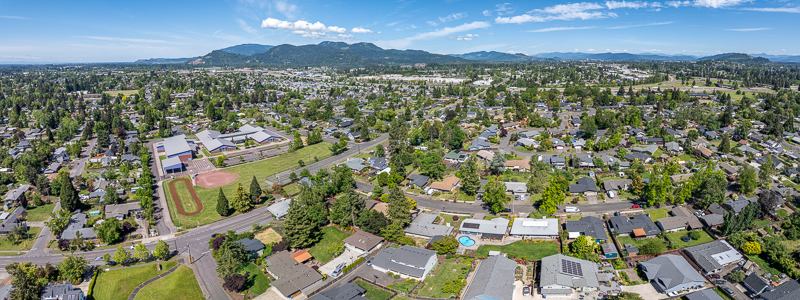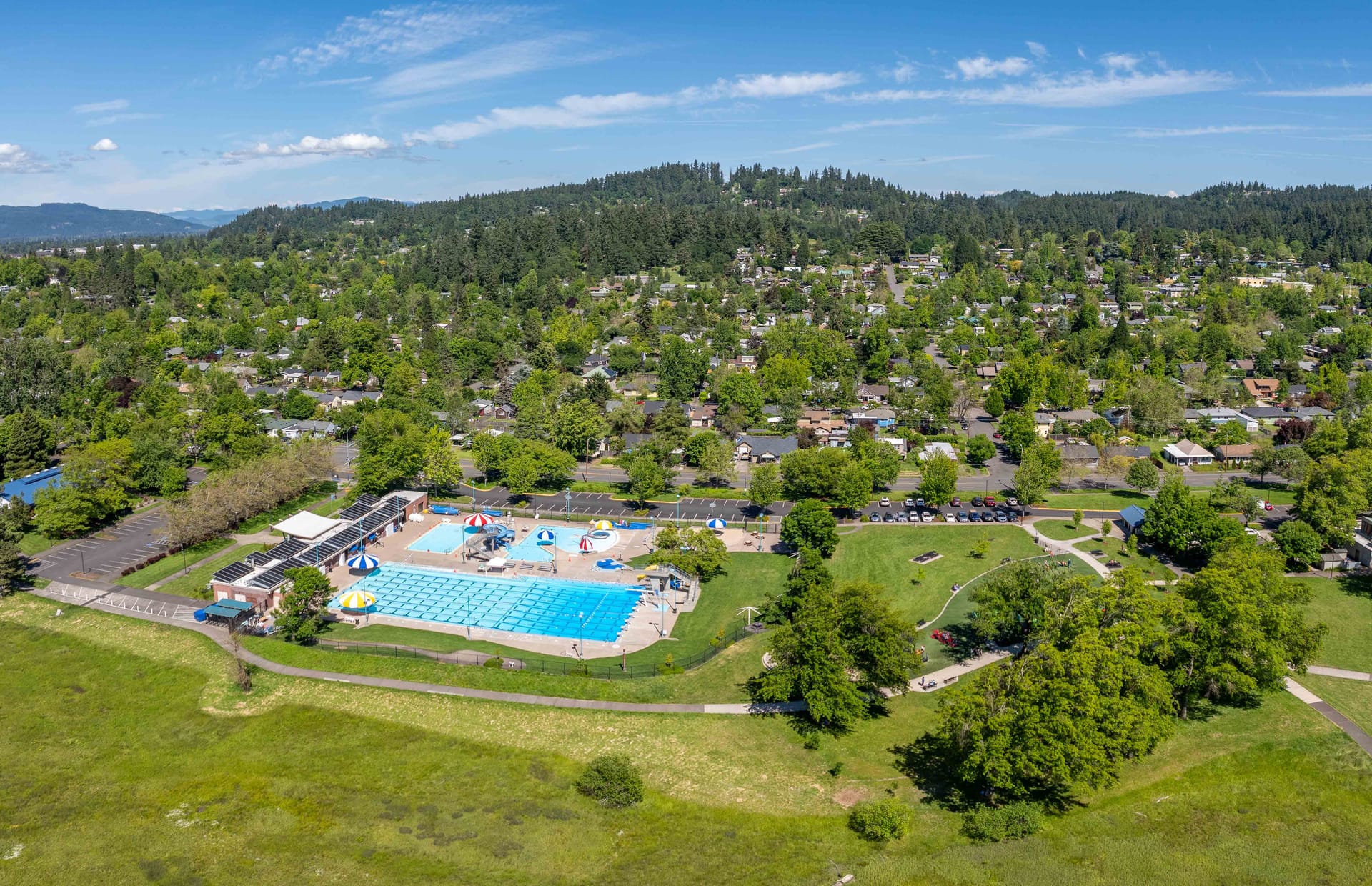

Something interesting happened with American migration data last year. For the first time ever, Oregon topped the United Van Lines annual movers study as the number one inbound destination in the country — 65% of all moves were people coming in, not leaving. And of all the metros in Oregon, Eugene-Springfield ranked first, with 85% of moves being inbound.
That's not a coincidence. And if you're a Californian thinking about making this move, you're part of a pattern that's been building for years.
California is the single largest source of people moving to Oregon — 22% of all inbound movers to the state came from the Golden State in 2025, according to the same study. Around 25,000 Californians made the move to Oregon last year. Many of them landed in Eugene.
Planning the move? Start with our Moving to Eugene relocation guide, then see why so many people are moving to Eugene and what relocating takes, step by step.
Why Californians Are Moving to Oregon: The Price Gap and What It Means for a Seller
Oregon has a state income tax, which is the first thing California movers should plan for, and no sales tax, which offsets some of it. The property tax picture is different from what most Californians expect: Oregon caps annual increases in a home's assessed value at 3% under Measure 50, so the taxable value grows slowly even when market values climb, and it is not reset to your purchase price. We compare the numbers in the tax section below, and our guide to property taxes after buying a home in Oregon covers how a bill is built.
The home-price gap between California's coastal metros and Eugene is large enough that most California sellers arrive with substantial equity — often enough to buy in Eugene with a significantly smaller mortgage, or in some cases outright. That changes the monthly math in ways that a simple price comparison doesn't capture. A smaller loan at the same interest rate means a lower payment, lower interest cost over time, and more financial flexibility in a new city.
Eugene's price range is wide. Affordable homes in Eugene exist in established neighborhoods that would be entry-level price points in most California metros. At the higher end, Eugene luxury homes offer acreage, river frontage, and custom construction at prices that rarely appear in Bay Area or Los Angeles searches. The middle of the market — three-bedroom homes in walkable neighborhoods close to parks and schools — is where most California transplants land, and where the equity math tends to work most clearly.
One practical note on Oregon income tax: the state has no sales tax, which offsets some of the income tax difference for everyday spending. Whether the net tax picture improves or worsens compared to California depends heavily on income level, retirement income sources, and whether capital gains from a home sale are involved. A CPA familiar with Oregon tax law is worth the conversation before the move — not after.
If you want to see what the current Eugene market looks like before committing to a visit, browse Eugene homes for sale to get a feel for what different price points actually buy in different neighborhoods. The range is broader than most California buyers expect. Our Eugene home prices page shows what homes have actually sold for.
What California Equity Buys in Eugene
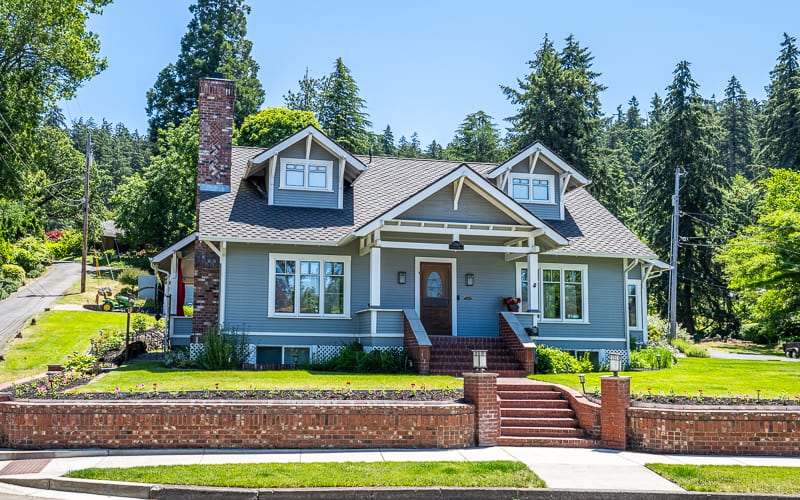
This is where the math becomes real for most California sellers. The difference isn't just price — it's what the price buys.
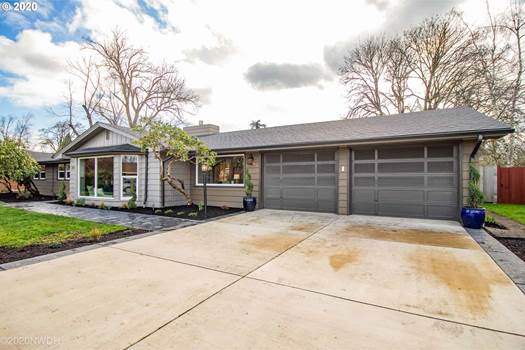
In Eugene, a $520,000 budget gets you a three-bedroom house with a yard in an established neighborhood. In South Eugene, that budget opens doors to homes near neighborhood schools and trail access to Spencer Butte. In quieter areas like Cal Young or Santa Clara, it gets you a well-maintained home in a neighborhood with a genuine community feel.
For buyers coming from San Jose or San Francisco who sold at $1.2M or higher, the experience is even more dramatic. The equity from a Bay Area sale can buy a Eugene home outright or leave a substantial reserve after a significantly smaller mortgage. Retirement math, for many, suddenly works in Oregon in a way it never did in California.
If you're wondering which area fits your priorities, our Best Neighborhoods in Eugene guide breaks down each neighborhood by price and what it's known for.
If you want to see what's currently on the market, browse homes for sale in Eugene OR to get a real sense of what your California equity actually buys here.
The Tax Picture — Honest and Complete
Nobody moves states purely for taxes, but understanding what changes in your wallet matters. Here's the honest version:
Sales tax: California charges 7.25% statewide, with local add-ons pushing effective rates as high as 10.75% in some cities. Oregon has no state sales tax — zero. For a household that spends normally, this saves somewhere between $2,000 and $4,000 per year depending on spending habits. Buy a $40,000 car in California and you pay $3,000+ in sales tax. In Oregon, you pay nothing.
State income tax: This is where California moves to Oregon don't automatically win. California's top marginal rate is 13.3% — highest in the nation. Oregon's top rate is 9.9%, which is still high but meaningfully lower for high earners. For earners in the $100,000–$400,000 range, the income tax picture is closer than people assume. For earners above $500,000, Oregon is clearly better.
Property tax: Oregon's effective property tax rate averages around 0.93%, slightly higher than California's Prop 13-capped rate of about 0.73%. Both states limit how fast a bill can grow, in different ways: California resets assessed value to the purchase price at sale and then caps increases at 2% a year, while Oregon taxes an assessed value that is not reset at sale and caps its growth at 3% a year. The difference in absolute dollars is typically modest, and it is worth running the numbers for the specific home. Our guide to property taxes after buying a home in Oregon shows how an Oregon bill is built.
The bottom line: Most California-to-Eugene movers come out meaningfully ahead financially. The sales tax elimination alone is a real ongoing saving. For high earners, the income tax gap adds up over time. For most buyers, the biggest financial win is simply the $200,000–$400,000+ gap in home price.
Eugene vs. Portland — Why California Buyers Often Choose Eugene
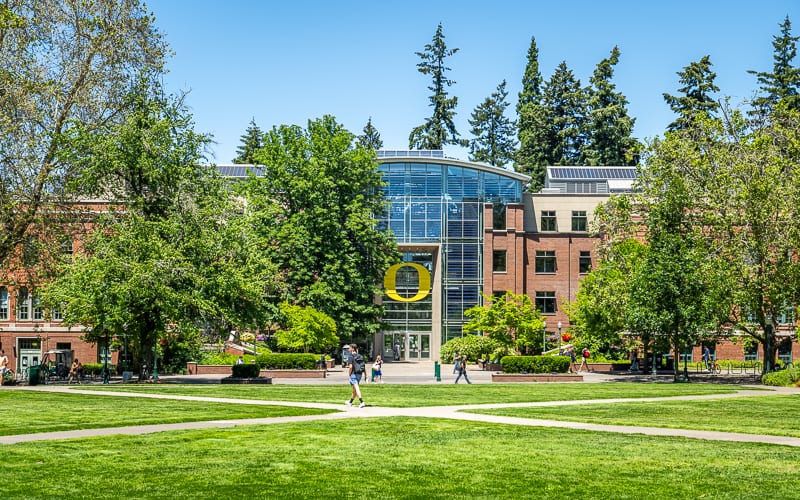
Portland gets more attention. Eugene keeps getting chosen.
The Eugene Association of Realtors president put it well in a recent interview: "People call it the 'happy medium.' It has everything Oregon offers — beauty, community, arts and culture, higher education, tech and medical jobs — and yet it's a more affordable place with a more temperate climate than the coast or central Oregon, and less negative press than Portland."
That last part matters. Portland has faced significant media coverage around street conditions and livability issues over the past several years. Eugene, while not without its own urban challenges, has largely avoided that narrative. The University of Oregon anchors the economy and gives the city a consistent intellectual and cultural energy. PeaceHealth Sacred Heart Medical Center provides major healthcare infrastructure. The outdoor access — Spencer Butte, the McKenzie River, the coast an hour west — is genuinely exceptional.
For California transplants specifically, Eugene tends to appeal to buyers who want the Pacific Northwest lifestyle without the density and cost of Seattle or Portland. We've covered the full Eugene vs. Portland comparison separately — smaller city, real community, same mountains and coast.
The Neighborhoods Worth Knowing Before You Visit
California buyers tend to arrive with equity and a list of priorities. Here's a quick orientation by what matters most:
If schools are the priority, many buyers start in South Eugene — neighborhoods like Fox Hollow, Southwest Eugene, and the area served by South Eugene High School. Prices run $450,000–$600,000 and up. Our guide to schools in Eugene shows where to read each school's ratings.
If walkability and culture matter, College Hill and the Friendly Area neighborhood put you within walking distance of local dining, coffee shops, and the University of Oregon campus. These feel most familiar to buyers coming from dense California neighborhoods.
If you want more space for the money, North Eugene — Cal Young, Harlow, Santa Clara — offers newer homes on larger lots at competitive prices.
If budget is the primary driver, West Eugene (97402) offers the lowest price points in the city, and Springfield — right next door, often overlooked — has a median around $425,000–$450,000 with access to everything Eugene offers. See the Springfield housing market update for current numbers.
Browse Eugene listings by neighborhood or see small towns near Eugene.
Eugene Weather and Daily Life: What People Don't Tell You Before the Move

When people moving here ask what it is like to live in Eugene, our principal broker, John Romito, tells them: “Eugene is central to everything: about an hour to the coast, about an hour to the snow in winter, and trails right in town, from the paths along the Willamette to Spencer Butte and the Ridgeline Trail in the South Hills. The seasons are mild, but you get all four.” More of his answers are on our Eugene homes for sale page.
The rain is real. Eugene gets meaningful precipitation from October through May. Not the dramatic storms of the Oregon Coast — more of a persistent gray and drizzle. Summers are genuinely beautiful: warm, dry, green. Most California transplants say they adjusted faster than expected, especially once they discovered that life in Eugene doesn't stop for rain the way it might in LA. People hike, bike, and garden in the drizzle here. It's part of the culture.
The pace is different. Not slower in a dull sense — different in the way that a city of 175,000 with a major university is different from a California metro. You'll know your neighbors. The farmer's market actually feels like a community event. Traffic is measured in minutes, not hours.
Oregon has no sales tax, but it does have an income tax — and if you're working remotely for a California employer, your tax situation should be reviewed by a CPA before you move. Oregon taxes residents on income earned anywhere; California may try to claim income earned before you establish Oregon residency. It's manageable, but it's worth doing properly.
Finally — the Eugene housing market has loosened a little since spring, but well-priced homes still move. As of October 2026 Eugene is a soft seller's market at 2.7 months of supply, with homes that sold taking about 44 days on average at 99.2% of asking. With 85% of Eugene-Springfield moves inbound, buyers coming from California with equity and pre-approval are competitive, but arriving without an agent who knows the local market is a disadvantage. Redfin data consistently shows LA and San Francisco as the top two out-of-state markets searching Eugene listings — meaning you're not the only one making this calculation. Our monthly Eugene housing market update has the latest figures.
Ready to Make the Move?
Our team of Eugene real estate agents works with relocating buyers from California and across the country regularly. We know which Eugene neighborhoods feel most familiar to Bay Area transplants, which ones offer the best value for buyers coming with equity, and how to navigate the market as an out-of-state buyer. Our Moving to Eugene guide, relocation guide and moving checklist cover the practical side of a long-distance move.
The process doesn't have to start with a plane ticket. A conversation about what you're looking for, what your California home sold for, and what life in Eugene could realistically look like costs nothing. Use the contact form on this page to get started, and one of our agents will reach out to discuss your move.
Search Eugene homes for sale | See the 2026 Eugene market data | Reach our team
Frequently Asked Questions: Moving from California to Eugene
Why are so many Californians moving to Oregon?
Mostly price and pace. California is the largest single source of people moving to Oregon — 22% of inbound movers in 2025, or about 25,000 Californians — and the United Van Lines movers study ranked Oregon the number one inbound state, with 85% of Eugene-Springfield moves inbound. The draw is what California home equity buys here: a smaller mortgage or none at all, no sales tax, and a mid-size city with a major university, a medical center and quick access to trails, the McKenzie River and the coast.
Is moving from California to Eugene actually cheaper overall?
For most movers, yes — but the savings come from housing, not taxes. Eugene's median home price sits around $468,000 versus California's ~$780,000, a gap that typically dwarfs any tax differences in either direction. Add Oregon's 0% sales tax (saving $2,000–$4,000 a year for typical spenders) and the housing equity many Californians arrive with, and the financial math favors Eugene for the majority of buyers. The exception is high earners who plan to keep earning at top California rates — the income tax picture is more nuanced for that group, covered in the next question.
How does Oregon's income tax compare to California's for high earners?
Honest answer: it depends on your income bracket. California's top rate is 13.3% — the highest in the nation — but it only applies above $1 million. Oregon's top rate of 9.9% kicks in at just $125,000 for single filers, which means for earners in the $100,000–$400,000 range, Oregon often takes a larger bite than California. Above roughly $500,000, Oregon becomes clearly more favorable, and above $1 million the gap widens significantly. One important caveat: Portland adds 2.5%+ in local income taxes for high earners, but Eugene does not, so the Oregon side of the comparison holds better for Eugene-bound movers than Portland-bound ones.
Which Eugene neighborhoods do California transplants typically choose?
It depends on what you're optimizing for. Bay Area buyers who put schools first often look at South Eugene — Fox Hollow, Southwest Eugene, and the area served by South Eugene High School. Buyers wanting walkability and university culture choose College Hill or the Friendly Area neighborhood. Equity-heavy buyers from Los Angeles or San Francisco often discover they can buy outright in Cal Young or Santa Clara and bank the difference. Remote workers earning out-of-state salaries tend to spread across all of these, since their budget is set by California pay rather than Eugene income.
Do I need to visit Eugene before making an offer on a home?
Most out-of-state buyers do visit before going under contract, but it's not required. The process generally works in two phases: a discovery conversation about neighborhoods, budget, and priorities (often by video call), followed by a focused in-person visit once we've narrowed the search to two or three areas. Some buyers — particularly relocating remote workers or families on a tight timeline — complete the entire process remotely with video walkthroughs and a local inspection. Whether to visit comes down to your timeline and comfort level, not a market requirement.
How competitive is the Eugene housing market for out-of-state buyers in 2026?
As of October 2026, Eugene is a soft seller's market at 2.7 months of supply (anything under 4 months favors sellers). Homes that sold took about 44 days on average, 58.2% sold within 30 days, and the average home sold at 99.2% of its final asking price, so buyers are paying close to asking. Our monthly Eugene housing market update has the latest figures. Out-of-state buyers can absolutely compete — many do, especially with California equity — but two things matter: pre-approval with a lender Oregon sellers recognize, and a buyer's agent who can move quickly on properties before they go pending. Arriving without either is the disadvantage, not being from out of state.